In 1998, fishermen diving for sea cucumbers in the Gelasa Strait off the Indonesian island of Belitung brought up pieces of a ship that should not have been there. The hull was Arab, not Chinese. Its planks were not nailed but sewn, stitched edge to edge with rope spun from coconut husk, the way boatbuilders on the Omani coast had worked for centuries. Inside it lay roughly sixty thousand pieces of Tang Chinese ceramic, and one bowl carried a date that read, in the Chinese calendar, to the year 826.
The ship had gone down in or soon after 826, loaded for the long voyage home. It is believed to be the first ancient Arab vessel ever found and excavated, and it settled an old argument in a single object. An Arab ship really had sailed to Tang China, traded, filled its hold, and turned back toward the Gulf. The world that the tales of Sindibad the Sailor describe, a world of Gulf merchants crossing the Indian Ocean toward the seas of China, was the world those merchants sailed.
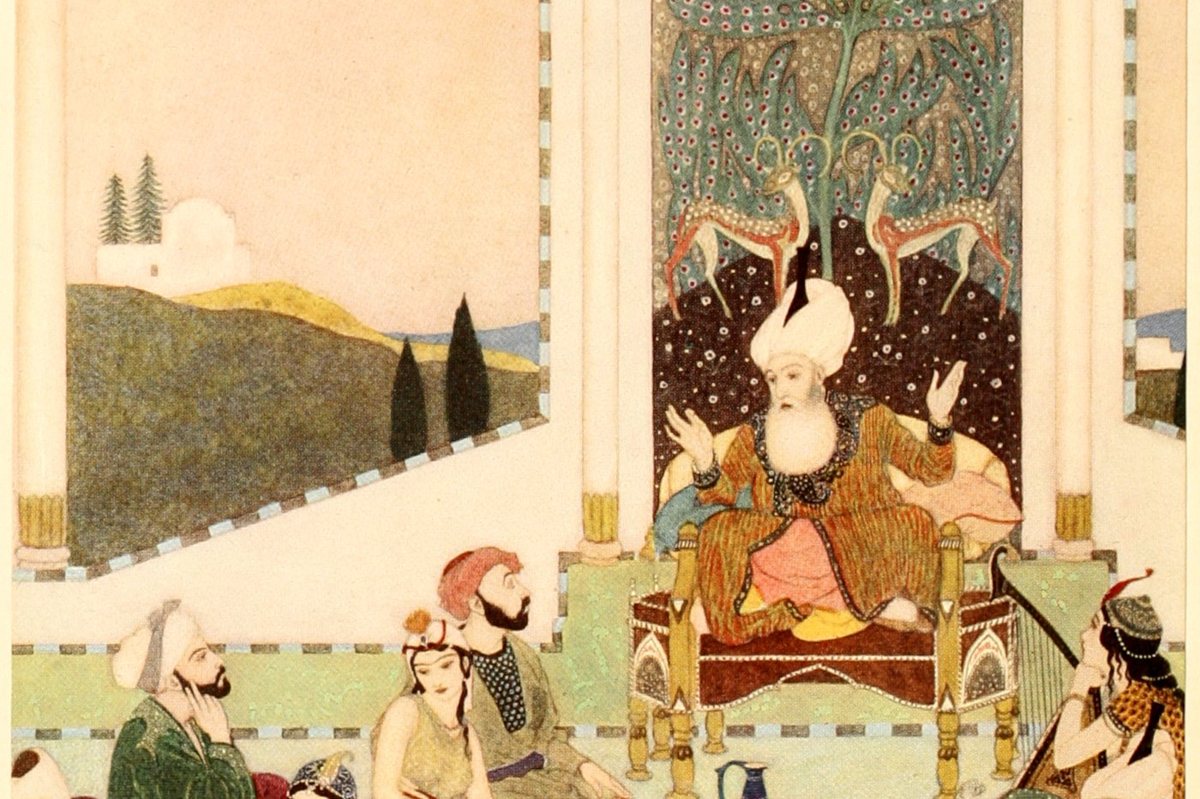
Sindibad belongs to the One Thousand and One Nights, though he arrived there late. The seven voyages circulated on their own before they were folded into the larger collection, and they reached European readers in the eighteenth century, through Antoine Galland’s French translation. In the tales Sindibad is a merchant of Baghdad, but he does not leave from Baghdad. He goes down to Basra, at the head of the Gulf, and from there he takes ship for the East. Scholars have long read the voyages as a fictional distillation of something real, the dangerous trade that Gulf merchants ran with India, the East Indies, and China in the early Abbasid centuries, roughly the years 750 to 850.
The roc that carries him off, the whale he mistakes for an island, the valley floored with diamonds, these are not pure invention either. They are the embroidery of a working sea route, the tall-tale versions of real cargoes and real hazards carried home by men who had been to the edge of the known world and back.
Who Sindibad himself was, if he was anyone, the tales never say. The most honest reading is that he is a composite, the distilled memory of generations of real merchant-mariners, Omani and Persian and Basran, who ran the route to China and came home with stories worth retelling.
Oman has never treated him as a stranger. Sohar, on the Batinah coast, calls itself the city of Sindibad, and the modern Sultanate has embraced the claim, on its maps, museums, and in the name it gave the ship it built to sail to China in 1980. No document makes Sindibad a Sohari, and the tales keep him in Baghdad and Basra. Sohar was the Omani harbour that launched the China trade, and the sailor the stories celebrate did exist, many times over, along this coast.
Around the year 750, a tradition preserved in the Omani sources holds, a merchant from the Sohar coast called Abu Ubaidah Abdullah bin al-Qasim made the long passage to southern China, trading for aloeswood in the first generation of the independent Omani state. Some accounts send him as an envoy of the Imam al-Julanda ibn Mas’ud to the Chinese court, and later Omani telling credits him with carrying Islam to the China coast. He is not Sindibad, but he is the sort of man they were built from, an Omani of flesh and record who reached China while the legend was still filling its sails.
Sohar aligns closely with the surviving evidence. By the tenth century it was one of the richest ports in the Gulf, and Arab geographers wrote about it the way later writers would write about Venice or Canton. Al-Muqaddasi, who finished his great survey of the Islamic world around the year 985, called Sohar “flourishing, populous, beautiful,” and compared it favourably with the ports of China themselves. To the geographers of his age it was something more specific, the gateway to China, the place where the long sea road to the Tang Dynasty began.
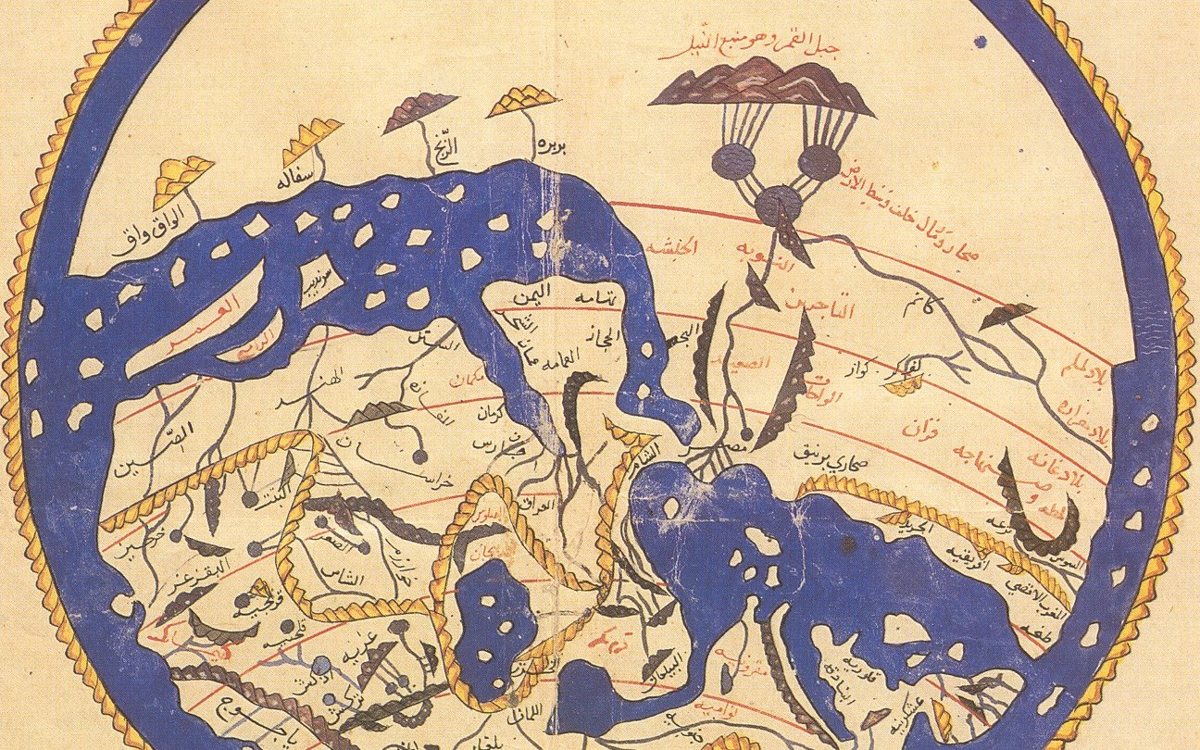
From Basra, the Persian port of Siraf, and Sohar, ships rode the monsoon east across the Arabian Sea, down the coast of India, through the Bay of Bengal that the Arabs called the Sea of Harkand, and on through the straits to Guangzhou, the great southern Chinese port they knew as Khanfu. A ship left on one monsoon and came home on its reversal, and the round trip could take the better part of two years. A merchant account written around 851, later expanded by a Gulf writer named Abu Zayd al-Sirafi, lays out the whole passage in working detail, the customs the Chinese levied, the discipline of their ports, and pottery so fine you could see the shimmer of water move through the walls of the cup.
The Chinese end of the road kept its own sailing directions. Around the year 800 the geographer and chief minister Jia Dan set down what he called the route from Guangzhou to the foreign lands across the sea, an itinerary preserved in the New Book of Tang (新唐书), and it runs the same passage in reverse, out past the mountains of Champa, through the strait, and on across the ocean, a hundred days’ sailing past small kingdoms to Persia and the head of the Gulf. Among the harbours it names on the Arabian side is one the scribes wrote as Meixun, which historical geographers have long read as Sohar. If that reading holds, the gateway to China has its own place in the Tang’s official geography, one road mapped from both ends.
At least one Chinese traveller rode the road’s full length and wrote it down. Du Huan, a Tang soldier captured by the Arabs at the Battle of Talas in 751, spent a decade in the caliphate before coming home in 762 aboard a merchant ship that landed him at Guangzhou. The fragments of his travel record, the Jingxingji (经行记), that survive in his kinsman’s great encyclopedia describe the land of the Dashi (大食), as the Tang called the Arabs, with the same mixture of wonder and inventory the Gulf writers brought to China. He is the legend’s mirror image, a man who made Sindibad’s journey in reverse and came home with the story.
By then the Arab and Persian merchants in Guangzhou were a resident community with an address in the Tang administrative record. From 714 the court kept a maritime trade commissioner at Guangzhou, the shiboshi (市舶使), to receive the ships and tax their cargoes, and the merchants themselves lived in a quarter of their own, the fanfang (蕃坊), under a headman who managed its affairs. Muslim, Christian, Jewish, and Zoroastrian traders lived and worked side by side there, generations deep, raising families and warehouses a year’s sail from home. By the time the Gulf writers set their accounts down, the sailing world they described had been running for more than a century.
The cargoes worked their way into Chinese books as well. Duan Chengshi, a ninth-century collector of marvels whose miscellany had room for every kind of wonder, catalogued with a naturalist’s care the frankincense and myrrh, the Persian dates, and the ambergris that came in by sea from the Arabian and Persian lands.
The relationship we now file under China and the Gulf is not a new one. It is the reopening of a sea road that was already a thousand years old before anyone called it the Belt and Road.
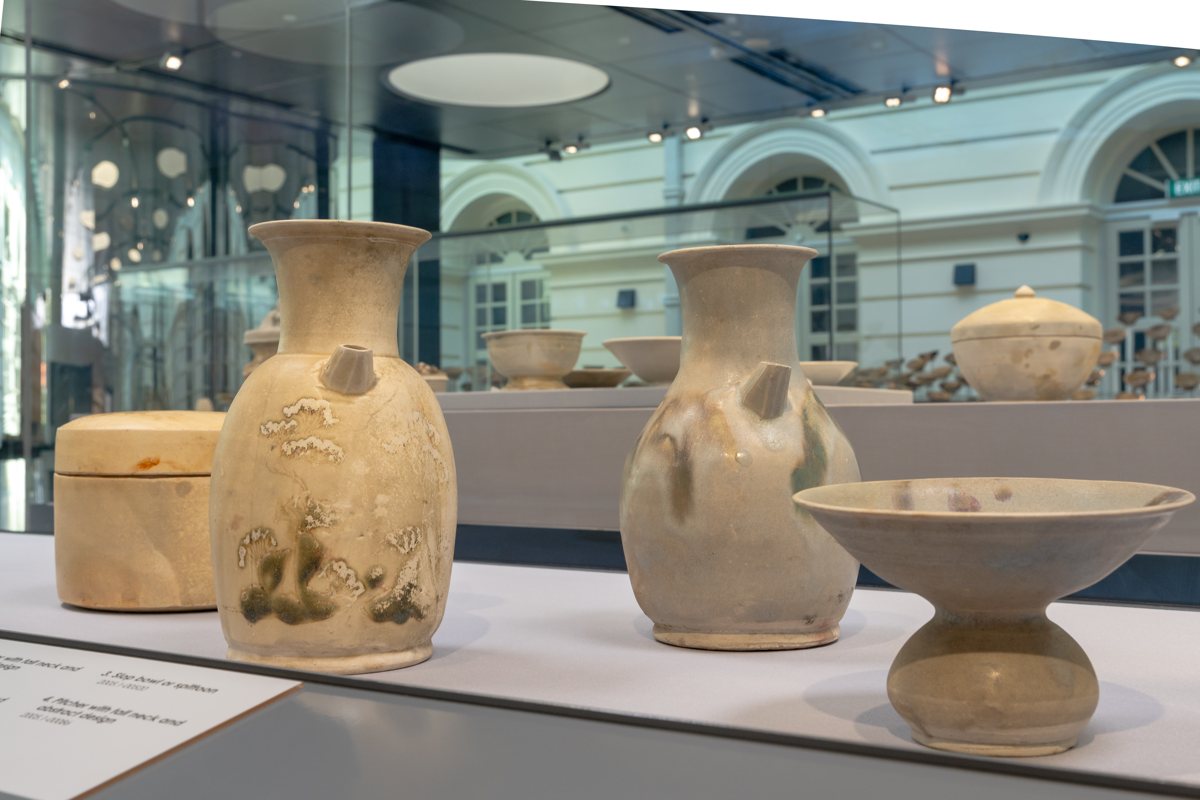
On the seafloor off Belitung, the texts met their proof. The hull, stitched in the tradition Omani yards shared with the wider western Indian Ocean, held Changsha bowls packed by the thousand inside tall storage jars, white northern stoneware, and, scattered among them, some of the earliest intact blue-and-white dishes anyone has found. Chinese archaeologists know the wreck as the Heishi hao (黑石号), the Black Stone, and they have traced its bowls to the Tongguan kilns (铜官窑) near Changsha, where excavations since the 1950s have turned up the same shapes and glazes, some painted with Arabic script and palm-leaf motifs for buyers the potters would never meet. The cargo now fills the Tang Shipwreck Collection at the Asian Civilisations Museum in Singapore.
The recovery carries a shadow. The wreck was raised by a commercial salvage operation rather than a careful archaeological excavation, and the manner of its raising remains a live controversy. In the ninth century, ships of the kind Omani builders knew how to make were sailing to China and coming back full.
For a long time the open question was whether such a ship could really have made such a voyage, or whether the distance had simply grown in the retelling, the way Sindibad’s rocs and sea monsters had. In 1980 an Irish writer and explorer named Tim Severin set out to answer it the hard way. With the backing of Sultan Qaboos bin Said of Oman, he had a ship built at Sur, on the Omani coast, to the old design, with no engine and not a single iron nail in her. The planks were stitched together by hand with close to four hundred miles of rope rolled from coconut husk, the same method that had held the Belitung hull together eleven centuries earlier. He named her Sohar, after the port that had been the gateway to China.
On 21 November 1980 the Sohar left Oman with a crew of about twenty-five and turned east on Sindibad’s route, down the Malabar coast of India, past Sri Lanka, across to Sumatra, through the Malacca Strait. She reached Guangzhou on 6 July 1981, close to six thousand miles later, after seven and a half months under sail. A hand-sewn hull built to a ninth-century Omani plan had reached China on the wind alone, exactly as the geographers said it could.
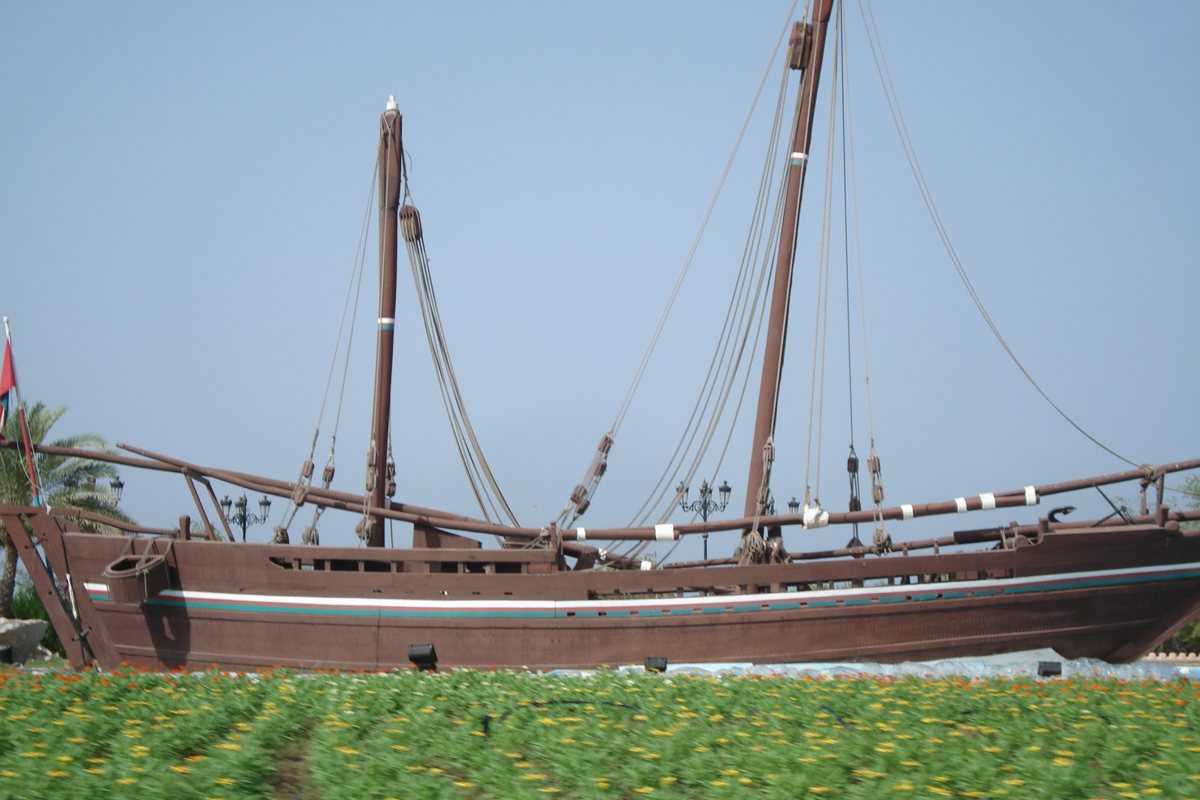
The Sohar came home to Oman and never sailed again. She sits now on a roundabout below the hills near Muscat, masts bare, hull dry, a ship turned into a monument. When Oman and China mark their friendship today, this is the image they reach for. Chinese state media has called the Sohar a symbol of a bond that runs back more than a thousand years.
Because the relationship we now file under China and the Gulf is not a new one. The Chinese-backed industrial city taking shape beside the new deep-water port at Duqm, the tankers running crude from the Gulf to Chinese refineries, the talk of a maritime Silk Road revived, all of it runs along a line that was open before any of the modern names existed. The hulls are steel now, and the cargo is oil instead of Changsha bowls, but the route itself has not moved. Oman stood at the start of it when the geographers called Sohar the gateway to China, and Oman stands near the start of it still. The rope that once stitched the planks is long gone, yet the thread it stood for, the line running from Sohar to the Tang and from Oman to China, was never cut.
Sources. Al-Muqaddasi, Ahsan al-Taqasim fi Ma’rifat al-Aqalim (c. 985); Abu Zayd al-Sirafi, Accounts of China and India (early 10th century); Jia Dan’s sea itinerary from Guangzhou, preserved in the New Book of Tang; the fragments of Du Huan’s Jingxingji preserved in the Tongdian (801); Duan Chengshi, Youyang Zazu (9th century); the Tongguan kiln excavations, Hunan; the Tang Shipwreck Collection, Asian Civilisations Museum, Singapore; Tim Severin, The Sindibad Voyage (Hutchinson, 1982).